
Do I Need a Pool Fence for a Spa in Arizona?
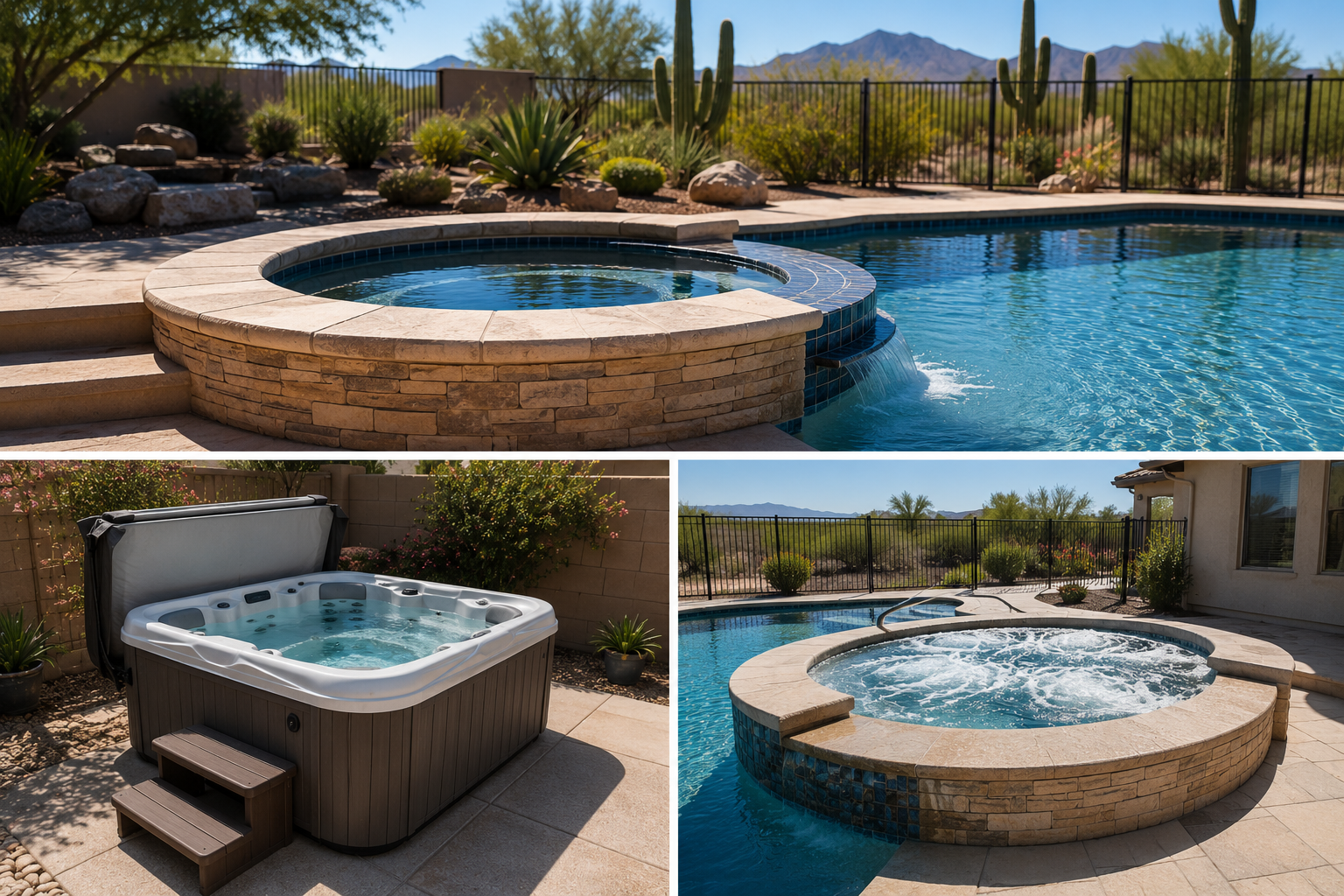
If you have a spa or hot tub in your backyard, it’s easy to assume it doesn’t carry the same risks or requirements as a full swimming pool. That assumption is where problems start. In Arizona, especially around Phoenix, spas are still considered a serious safety concern from both a legal and liability standpoint.
Many homeowners rely on spa covers and think that’s enough. Sometimes it is, on paper. In reality, covers get left open, wear out over time, or don’t meet the standards required to actually prevent access. That gap between “technically compliant” and “actually safe” is what leads to accidents and costly mistakes.
What Counts as a “Spa” in Arizona?
Not all spas are treated the same, and the way yours is built directly affects whether fencing or barriers are required.
- In-ground spa
- Built into the ground, often similar in structure to a pool
- Typically permanent and integrated into the landscape
- More likely to fall under pool barrier laws due to accessibility and depth
- Above-ground spa or hot tub
- Freestanding unit, usually installed on a patio or slab
- Often includes a cover and sometimes partially built-in walls
- May qualify for alternative safety measures depending on height and access
- Spillover spa connected to a pool
- Attached to a swimming pool and shares the same water system
- Usually elevated slightly with water flowing into the pool
- Almost always treated as part of the pool for safety and fencing requirements
Why classification matters:
- Arizona laws focus on risk and accessibility, not just labels
- The more accessible the water is, the more likely barriers are required
- Misclassifying your spa can lead to non-compliance and liability issues
Standalone Spa vs Pool-Connected Spa
This is one of the biggest factors in determining what’s required.
- Standalone spa
- Separate structure with its own footprint
- May allow for safety cover compliance instead of full fencing in some cases
- Still evaluated based on accessibility and the surrounding environment
- Spa attached to a pool
- Considered part of the overall pool system
- Must follow the same fencing and barrier requirements as the pool
- No separate exemption just because it’s labeled a spa
Why Homeowners Get Confused
The confusion usually starts before the spa is even installed.
- Builders and listings use “spa” and “pool” interchangeably
- Marketing language doesn’t reflect legal definitions
- A “spa” can still be treated exactly like a pool under the law
- Safety laws don’t always clearly distinguish in everyday language
- Regulations are written broadly to cover different water features
- Homeowners assume smaller size means fewer requirements, which isn’t always true
The result is many homeowners thinking they’re compliant when they’re not, or skipping safety measures that would significantly reduce risk.
Arizona Pool Barrier Laws (How They Apply to Spas)
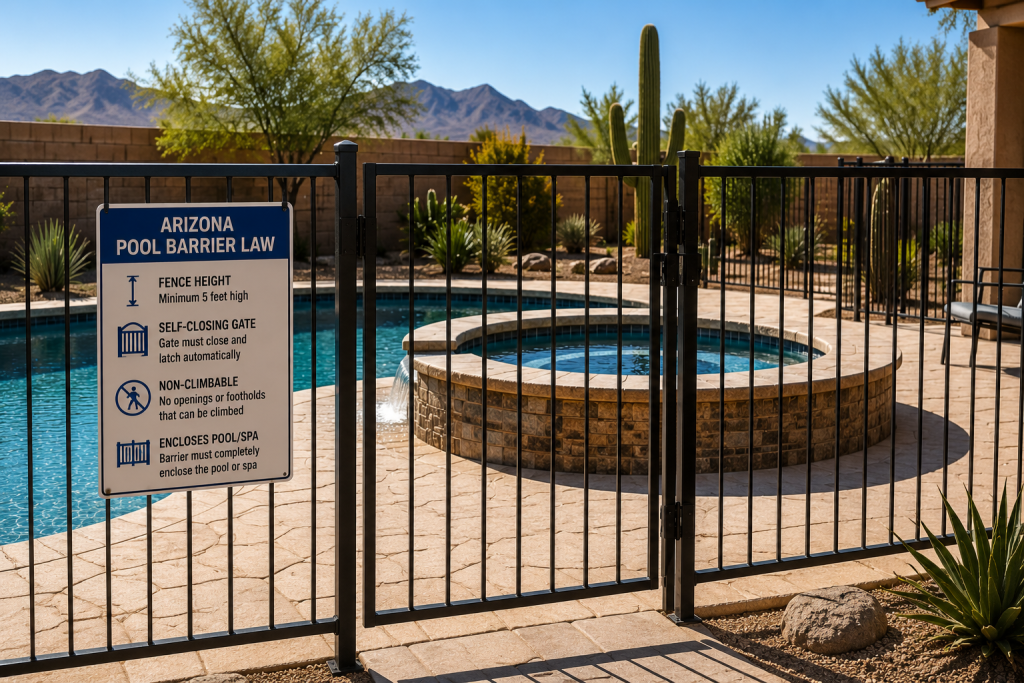
Overview of Arizona Revised Statutes (ARS 36-1681)
Arizona law doesn’t just apply to traditional swimming pools. It’s written broadly enough to include other water features that present a risk.
- Law applies to residential pools and “other contained bodies of water”
- This language is what brings many spas into scope
- It’s based on risk and accessibility, not just size or label
- Focus on protecting children under six
- The primary goal is to prevent unsupervised access
- Barriers are required when there’s a reasonable risk of a child gaining entry
When a Spa Falls Under Pool Barrier Requirements
Not every spa is automatically required to have a fence, but many fall into that category based on how they’re built and installed.
- In-ground spas are often treated the same as pools
- Permanent structure and easy access increase risk
- Typically expected to meet the same barrier standards
- Spas deeper than a certain threshold may require barriers
- Depth and ability to submerge are key factors
- Even smaller spas can qualify, depending on design
- Local city codes (Phoenix, Scottsdale, Mesa) may expand requirements
- Cities can enforce stricter rules than the state
- Homeowners need to check both state law and local ordinances
- Compliance varies depending on where the property is located
Key Legal Requirements to Cover
When a spa falls under barrier laws, the requirements are specific and enforced.
- Minimum fence height (typically 5 feet)
- Designed to prevent easy climbing or access
- Must fully enclose the pool or spa area
- Self-closing, self-latching gates
- Gates must close automatically every time
- Latches are positioned high enough to be out of reach of small children
- Distance from the water edge
- Fence placement must create a separation zone
- Prevents direct access from the home or yard
- Non-climbable design
- No horizontal bars or features that act as footholds
- Spacing between components must prevent squeezing through
When a Spa Might Not Require a Fence
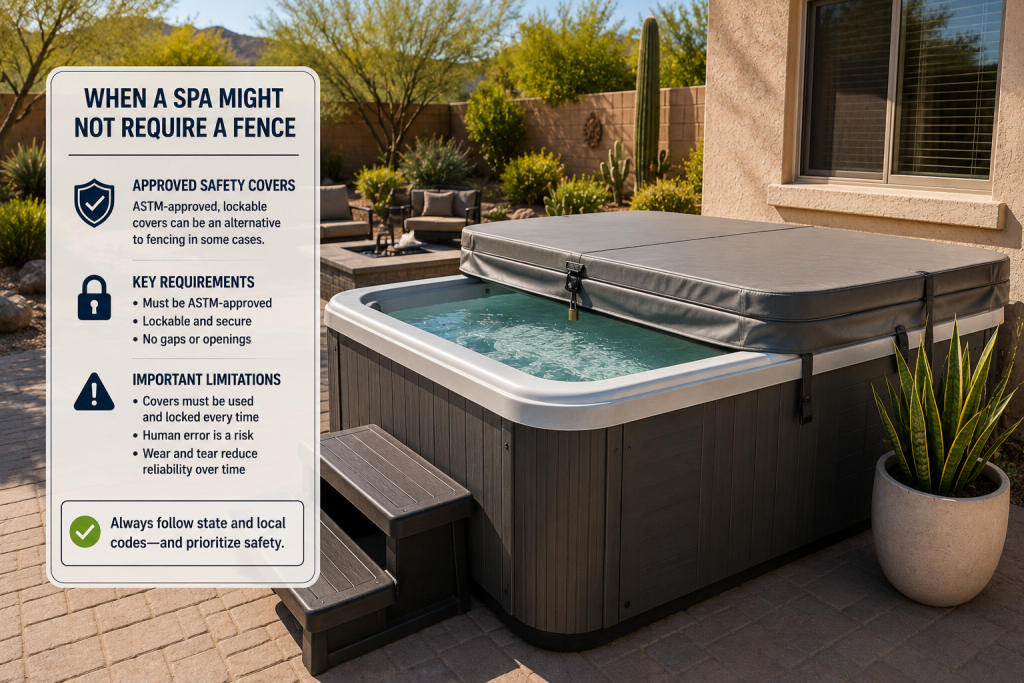
Approved Safety Covers as an Alternative
There are situations where a full fence may not be required, but it comes with strict conditions. The most common alternative is a compliant safety cover.
- ASTM-approved spa safety covers
- Must meet specific safety standards designed to prevent access
- Built to support weight and prevent collapse if someone steps on them
- Must be lockable and secure
- Covers need a locking mechanism that prevents easy removal
- Must fully seal the spa with no gaps around the edges
Limitations of Relying on Covers Alone
Even when a cover meets the technical requirements, it introduces risk that homeowners often overlook.
- Covers must be consistently used and secured
- Every time the spa is not in use, the cover needs to be closed and locked
- One missed instance creates exposure
- Human error is the biggest risk factor
- Guests, kids, or even homeowners forget to secure the cover
- Covers are often left open during gatherings or regular use
- Wear and tear reduce reliability over time
- Hinges, straps, and locks degrade in Arizona heat
- Small failures can turn a compliant cover into a liability
Above-Ground Spas with Built-In Barriers
Some above-ground spas are designed to reduce or eliminate the need for a separate fence.
- Some models meet barrier requirements by design
- The height of the spa walls limits direct access
- May qualify as a built-in barrier depending on local code
- Access steps become the weak point
- Steps or ladders create an easy entry path
- If not secured or removable, they defeat the purpose of the barrier
Why a Pool Fence for a Spa Still Makes Sense
Covers Protect Only When Closed
A spa cover can meet legal requirements, but it only works when it’s used exactly as intended every single time.
- Covers protect only when fully closed and secured
- Any gap or improper sealing creates access
- Leaving it open during use or between uses removes all protection
- High-risk moments happen during normal use
- Entertaining guests, quick dips, or maintenance
- These are the times when covers are most likely to be left open
Fences Create a Constant Barrier
A fence doesn’t rely on memory, routine, or effort. It works 24/7.
- Creates a physical boundary around the spa
- Prevents unsupervised access at all times
- Works whether the spa is in use or not
Protection for Children and Pets
This is where the difference between compliance and real safety becomes clear.
- Kids are naturally curious about water
- Even a small spa can attract attention
- It only takes seconds for a situation to become dangerous
- Pets can fall into uncovered spas
- Dogs and other animals can slip or lean in
- Without a barrier, there’s nothing stopping access
Liability and Insurance Considerations
Ignoring additional safety measures can create financial and legal exposure.
- Homeowners may be held responsible for accidents
- Even if the spa meets the minimum requirements
- Liability increases if additional precautions were reasonable but not taken
- Insurance companies may favor or require barriers
- Some policies include safety expectations for water features
- Lack of a barrier could impact coverage in certain situations
Peace of Mind for Homeowners
This is what most homeowners actually want, not just compliance.
- Especially important for:
- Families with young children
- Homes that host guests regularly
- Short-term rentals or Airbnb properties
- A fence removes uncertainty
- No second-guessing whether the cover was secured
- No relying on others to follow safety steps
Design Options for Spa Pool Fences
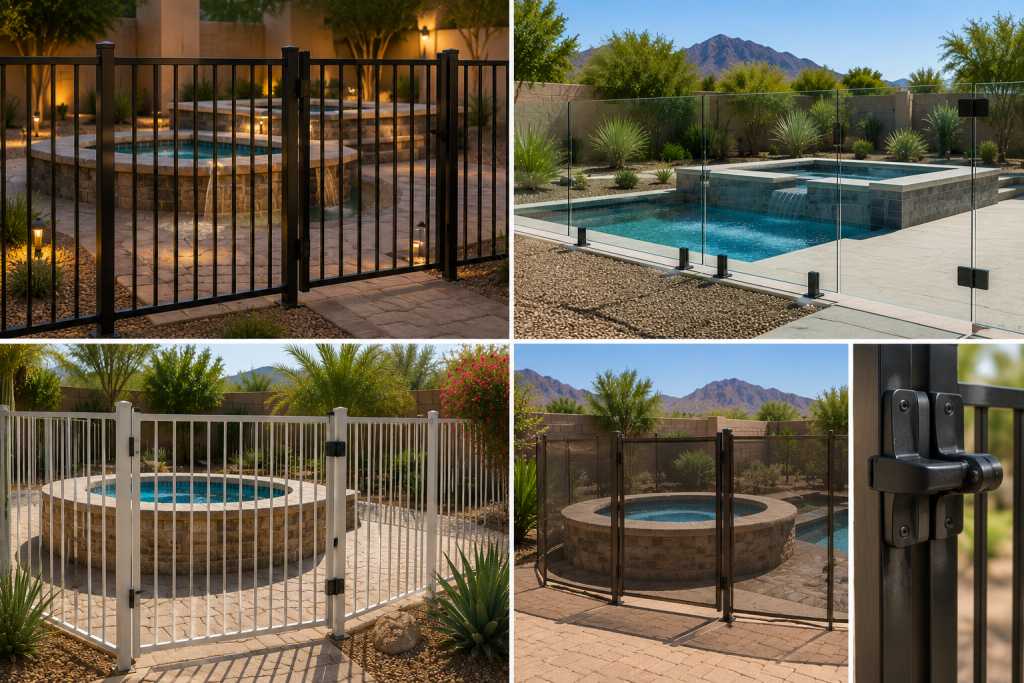
Removable Mesh Pool Fencing
This is the most common solution for spas, especially in Phoenix homes where flexibility is a priority.
- Most popular option for spas
- Designed specifically for smaller water features and tight layouts
- Widely used across Arizona due to ease and effectiveness
- Easy to install and remove
- Sections can be taken down when needed and reinstalled quickly
- Ideal for homeowners who want protection without a permanent structure
- Transparent and minimally intrusive
- Mesh design maintains visibility across the yard
- Doesn’t block views or disrupt landscaping
Permanent Metal or Glass Fencing
For homeowners focused on aesthetics or long-term installation, permanent fencing offers a more polished look.
- Higher-end aesthetic options
- Powder-coated metal or frameless glass designs
- Blends into modern or custom outdoor spaces
- Works well for integrated backyard designs
- Ideal when the spa is part of a larger pool or entertainment area
- Adds structure and consistency to the overall layout
Custom Layouts for Small Spaces
Spas are often installed in tighter areas, which requires more precise fence planning.
- Spas often require tighter fence configurations
- Limited space between the spa and walls, patios, or landscaping
- Standard fence layouts don’t always fit
- Importance of proper spacing and gate placement
- Enough clearance for safe access without creating gaps
- Strategic positioning to allow easy entry while maintaining protection
Gate and Access Considerations
The gate is one of the most important parts of the entire setup. It’s also where most failures happen.
- Self-closing, self-latching hardware
- Required for compliance in most cases
- Ensures the gate closes automatically after every use
- Placement for convenience without sacrificing safety
- Positioned for easy access during normal use
- Designed to prevent shortcuts or propping the gate open
Mistakes Homeowners Make with Spa Safety
Relying Only on a Cover
This is the most common mistake and the one that creates the most risk over time.
- Covers left open during gatherings or daily use
- Entertaining, quick use, or maintenance often leads to covers being left off
- These are the exact times when people and kids are nearby
- Creates exposure during the most active times
- The spa is most accessible when it’s being used
- No barrier means no protection in those moments
Improper Fence Installation
Even when homeowners install a fence, small mistakes can make it ineffective.
- Gaps that allow access
- Openings at the bottom or between panels
- Poor alignment with the ground or surrounding structures
- Gates that don’t latch properly
- Worn or misaligned hardware
- Gates that don’t fully close on their own
Ignoring Local Code Variations
Many homeowners assume meeting state requirements is enough. That’s not always the case.
- Assuming state law is the only requirement
- Arizona law sets a baseline, not a universal standard
- Cities can and do enforce stricter rules
- Missing stricter city-level rules
- Phoenix, Scottsdale, and the surrounding areas may have additional requirements
- Inspections or compliance issues can come up later during sales or renovations
Waiting Until After an Incident
This is the mistake no one plans to make, but it happens often.
- Reactive approach instead of preventative planning
- Safety upgrades are delayed until there’s a close call or actual incident
- At that point, the risk has already been realized
How Arizona Pool Fence Helps You Get It Right
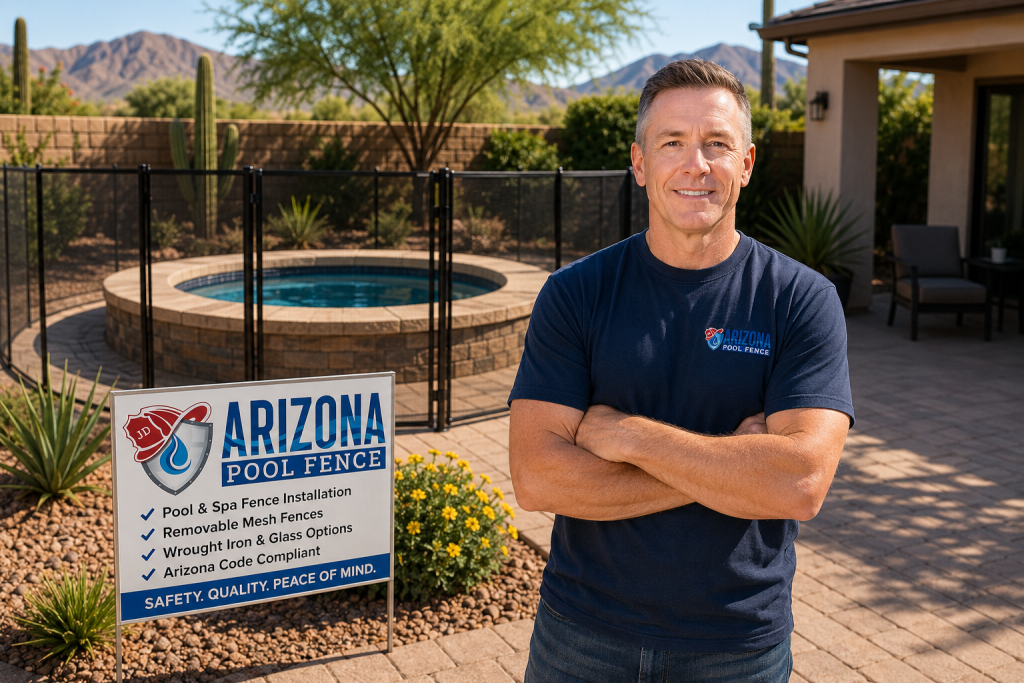
Local Code Knowledge
Getting this right starts with knowing the rules, not guessing them.
- Understanding Phoenix-area requirements across cities
- Each city can enforce different interpretations and stricter standards
- Experience with Phoenix, Scottsdale, Mesa, and the surrounding areas matters
- Ensuring compliance from day one
- Avoid failed inspections, fines, or required rework
- Set up your spa area correctly the first time instead of fixing it later
Custom Spa Fence Solutions
Spas aren’t one-size-fits-all, and the fence shouldn’t be either.
- Designed specifically for spa size and layout
- Tight configurations for patios, small yards, or corner installs
- Adjusted to fit the exact footprint of your spa and surrounding space
- Clean, professional installation
- Proper spacing, alignment, and secure anchoring
- No gaps, weak points, or shortcuts that compromise safety
Focus on Safety and Functionality
The goal isn’t just to meet code. It’s to reduce real-world risk.
- Not just meeting code, but actually reducing risk
- Addressing how people use the space day to day
- Eliminating access points that get overlooked
- Balancing aesthetics with protection
- Keeping the backyard visually clean while maintaining safety
- Options that work with the design of the home, not against it
Getting Started On Your Pool Fence
Spas may look smaller and less risky than pools, but the reality is different. They still provide the same level of exposure when it comes to safety, especially for children and pets.
Legal requirements can vary by setup and location, but relying solely on minimum compliance leaves gaps. Covers can fail or be left open. DIY solutions don’t create consistent protection. A properly installed fence is the one solution that works all the time, not just when someone remembers to use it.
Contact Arizona Pool Fence for a quick assessment and a custom fence solution built around your space. You’ll get a clear answer on what’s needed and a clean, effective way to fix it.
FAQs
Do I legally need a pool fence for a spa in Arizona?
It depends on the type of spa and where you live, but many in-ground spas are treated the same as pools under Arizona law. Local city codes can also add stricter requirements, so it’s not always optional.
Is a spa cover enough to meet safety requirements?
Only if it meets ASTM safety standards and is used correctly every single time. In real-world use, covers are often left open or not secured, which creates risk.
Are above-ground hot tubs exempt from fencing?
Not automatically. While some above-ground spas may meet height requirements, access points like steps or ladders still create exposure and may require additional safety measures.
What is the safest option for a spa?
A combination of a compliant safety cover and a properly installed fence. The fence provides constant protection, while the cover adds another layer when the spa isn’t in use.
How much space do I need to install a spa fence?
Very little. Most spa fences are custom-fit and designed to work in tight spaces, including patios, small yards, and corner installations.