Fall Pool Safety Tips for Phoenix Homeowners
September may mark the beginning of fall, but in Phoenix, it can still feel like summer around the pool. Warm afternoons keep backyard pools in regular use, whether kids are swimming after school, families are outside on the weekend, or friends are over for a Labor Day gathering.
That makes fall an important time to stay focused on pool safety.
Routines also begin changing this time of year. Kids are back in school. Daylight hours gradually get shorter. Families spend more time outside as temperatures become comfortable. Patio doors may stay open more often. Football parties and fall get-togethers bring additional people into the backyard.
A safe pool area depends on several layers working together. Active adult supervision should remain the priority whenever children are near water. A properly maintained pool fence, self-closing gate, secured doors, and clear pool area can help control access when swimming has ended.
Here are practical fall pool safety tips Phoenix homeowners can use throughout September and the months ahead.
Keep Active Supervision a Priority Around the Pool
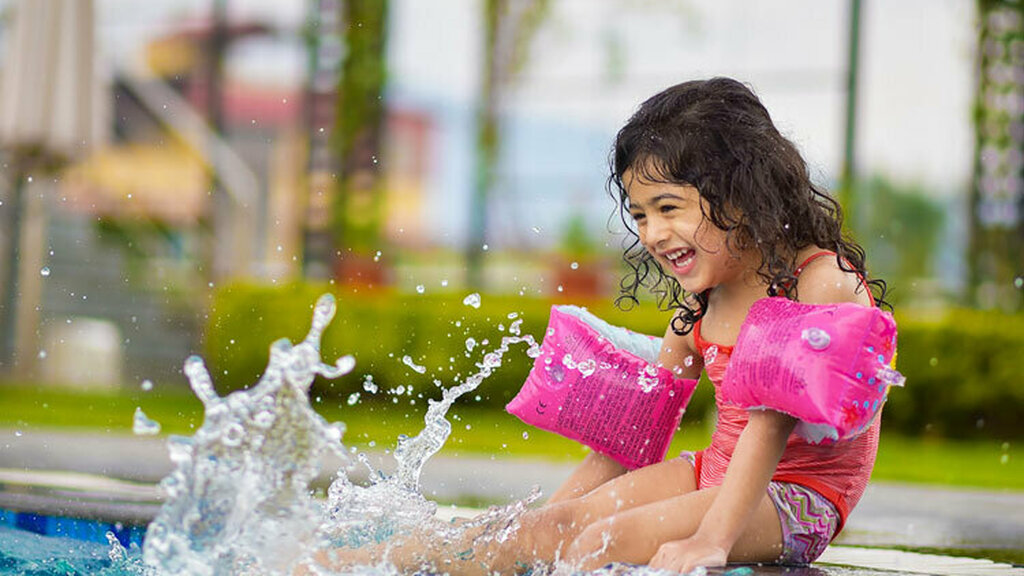
September is still pool season in Phoenix, so the supervision habits families used throughout summer should continue.
The CDC recommends close and constant adult supervision whenever children are in or near water. Drowning can happen quickly and quietly, which makes focused supervision especially important around backyard swimming pools.
Designate an Adult to Watch the Water
One of the simplest ways to strengthen supervision is to clearly identify who is responsible for watching the pool.
This becomes especially important when several adults are outside together. At a barbecue or family gathering, it can be easy for each person to assume someone else is watching.
Before kids get into the pool, choose a responsible adult who will actively watch the water. During longer swimming sessions, adults can rotate responsibilities so the supervisor stays attentive.
The person watching should have a clear view of the entire pool and avoid distractions such as:
- Checking a phone.
- Preparing food.
- Reading.
- Leaving the pool area.
- Becoming absorbed in conversations.
The CDC specifically recommends that adults supervising children avoid distracting activities while children are in or near water.
Stay Close to Young and Inexperienced Swimmers
Younger children and inexperienced swimmers need especially close supervision.
An adult should remain close enough to respond immediately if a child needs assistance. The CDC recommends that an adult remain within arm’s reach of a child who is in or near water.
Swimming lessons are valuable, but children who know how to swim still require supervision. Flotation devices can provide additional support when used appropriately, but they should not replace an attentive adult.
Keep Supervision Strong During Fall Gatherings
Fall brings plenty of opportunities to use the backyard in Phoenix.
Football gatherings, birthdays, cookouts, and family get-togethers can all put more people around the pool. More activity also means more potential for distraction.
If children will be swimming, decide who will supervise before the gathering gets busy. If the pool will remain closed, keep the pool fence gate secured and make sure doors leading toward the backyard are controlled.
Clear expectations make supervision easier for everyone.
Inspect Your Pool Fence After a Long Arizona Summer
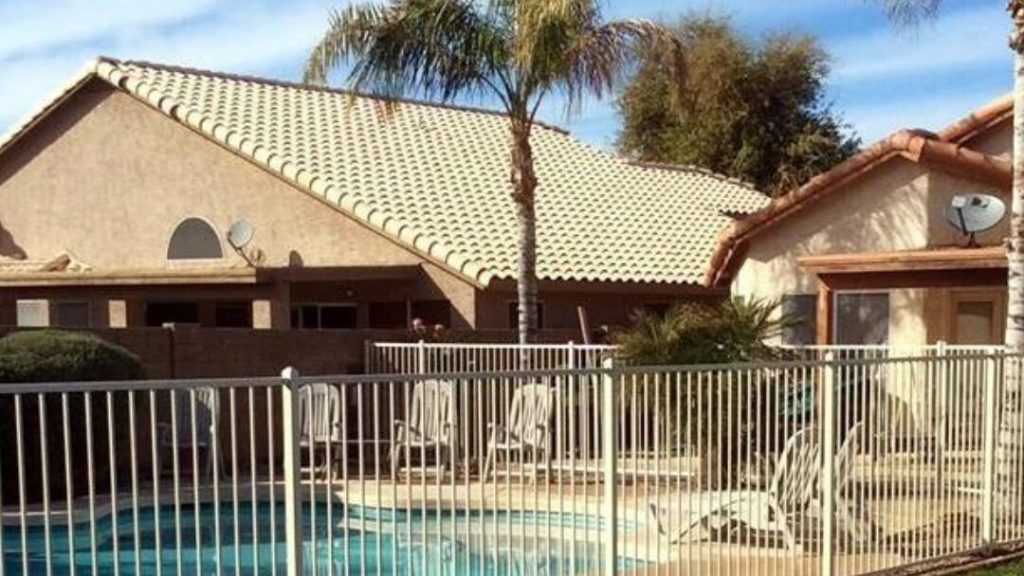
Arizona heat, monsoon activity, landscaping work, pool maintenance, and months of backyard use can all put wear on a pool area.
Fall is a good time to walk the entire pool fence and make sure everything still looks and operates as intended.
Walk the Full Pool Fence Perimeter
Start at one end of the fence and inspect the entire barrier.
Look for:
- Loose fence sections.
- Damaged mesh.
- Bent or loose poles.
- Shifting hardware.
- Unusual gaps.
- Sections that appear out of alignment.
- Areas where landscaping has grown into the fence.
Pay attention to anything that has changed since the beginning of summer.
Patio furniture, planters, storage bins, toys, coolers, and landscaping equipment can gradually move closer to the pool fence. Keep objects that could provide climbing access away from the barrier.
Check Removable Mesh Pool Fencing
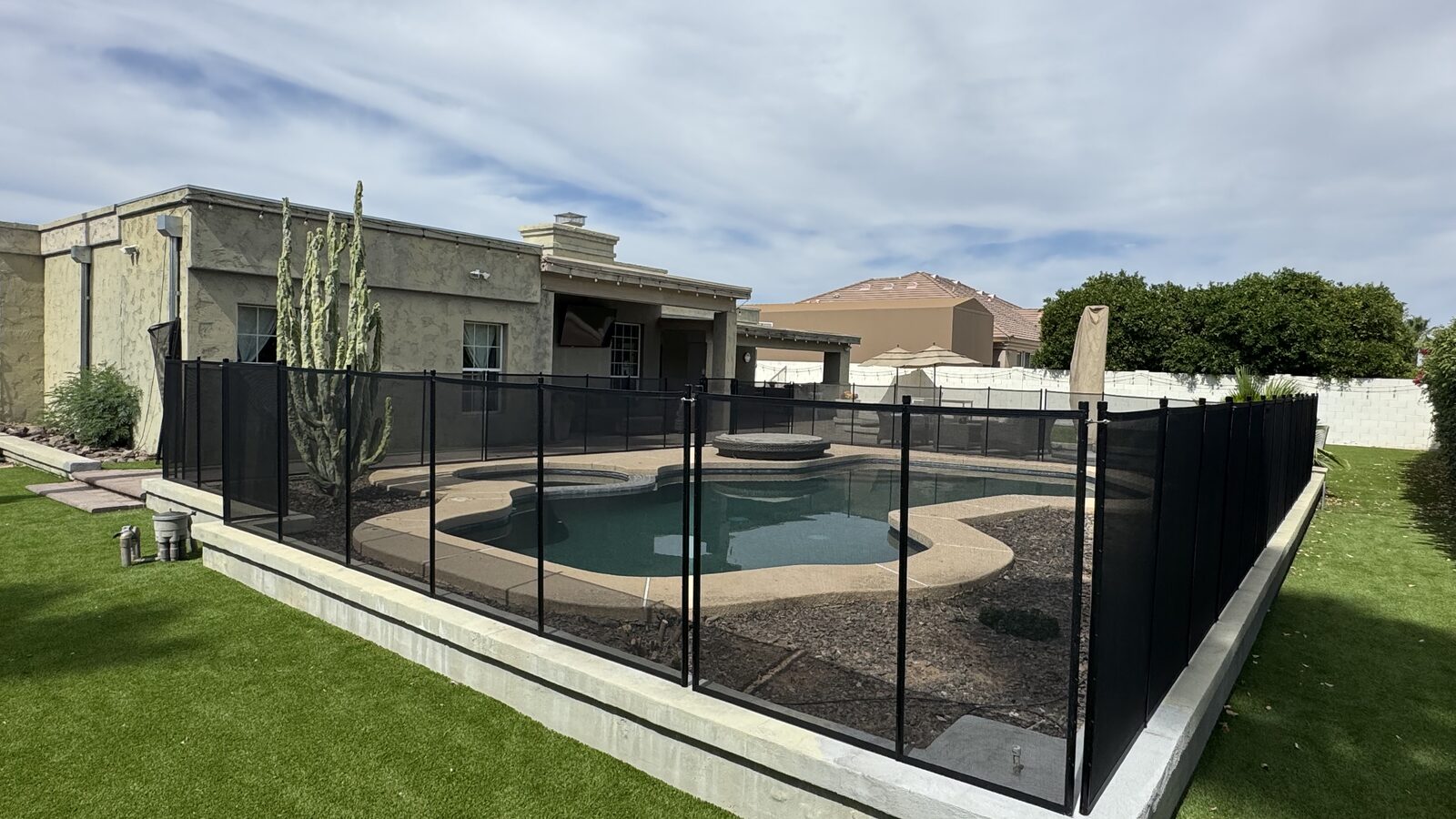
If you have removable mesh pool fencing, check the tension throughout the fence and make sure each pole remains properly seated.
Arizona Pool Fence installs removable mesh fencing designed for Phoenix-area pool environments. The company’s systems can be removed and reinstalled when properly maintained, making them useful for homeowners who occasionally want to open their backyard layout.
If sections were taken down during summer gatherings, landscaping projects, or pool work, inspect those areas carefully after reinstalling them.
A quick inspection now can identify a section that needs adjustment before fall backyard activity increases.
Test Your Self-Closing and Self-Latching Pool Gate
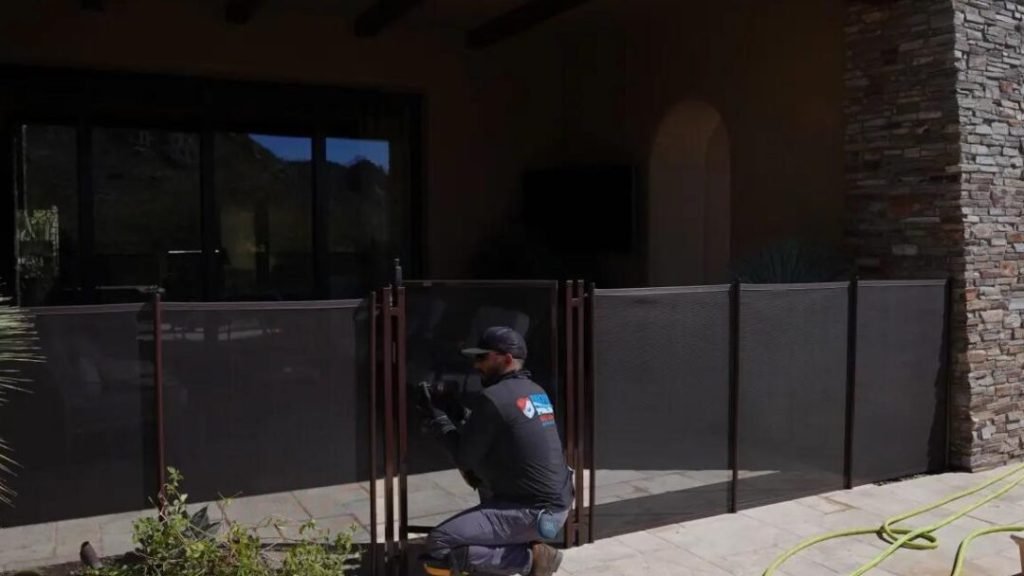
The gate gets used more frequently than almost any other part of a pool barrier.
That makes fall a good time to test it carefully.
Test the Gate From Several Positions
Open the gate completely and let it close on its own.
Then open it halfway and repeat the test. Finally, open it only a short distance and make sure it still returns to the closed position and latches securely.
Watch for a gate that:
- Closes slowly.
- Stops before reaching the latch.
- Drags against the ground.
- Requires a push to close.
- Does not latch consistently.
- Appears out of alignment.
Arizona law generally requires qualifying residential pools to have an enclosure with self-closing, self-latching gates, while local jurisdictions can have additional or more stringent requirements. The state statute also addresses barrier height, openings, gate direction, latch placement, and climbability.
Check the Gate Hardware
Inspect the hinges, latch, lock, and surrounding hardware.
A gate may look fine but still have a latch that only catches sometimes. Test it repeatedly to confirm it functions consistently.
Arizona Pool Fence installs self-closing and self-latching safety gates that are key-lockable and available with its mesh and pet pool fencing systems. The gate system uses a stand-alone frame designed to help the gate stay properly adjusted.
Keep Gates Closed During Parties
A backyard gathering often means people are walking between the house, grill, patio, and pool.
That can make propping the pool gate open seem convenient.
Keep the gate closed and latched after each entry. If guests will be moving through the area frequently, make sure everyone understands how the gate operates.
Pool barriers provide the most value when they stay in place, and access remains controlled.
Review Doors That Lead From Your Home to the Pool
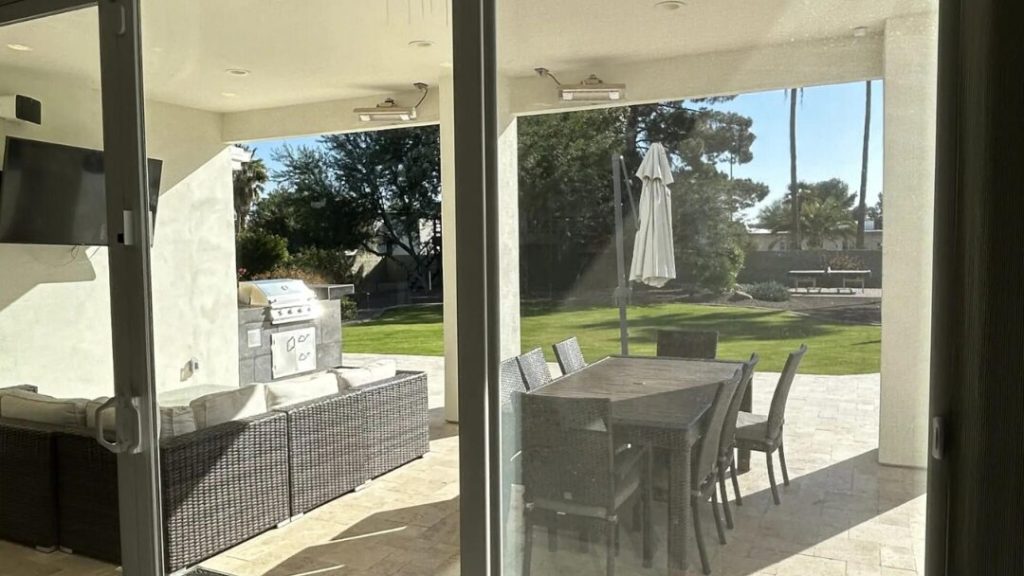
Fall weather can change how Phoenix homeowners use their homes.
As temperatures cool, patio and sliding doors often stay open more frequently. That makes doors leading toward the pool another important part of a fall safety review.
Check Every Door With Backyard Access
Walk through your home and identify doors that provide access toward the pool area.
Check that each door:
- Closes completely.
- Latches consistently.
- Locks properly.
- Moves smoothly.
- Has functioning safety hardware.
Pay particular attention to sliding glass doors. A door that stays partially open while people move between the house and patio can create unintended access to the backyard.
Consider Automatic Door-Closing Systems
Self-closing door systems provide another layer of control for homes where a door leads toward the pool area.
Arizona Pool Fence installs and repairs self-closing and self-latching door systems, including solutions for sliding glass doors and other backyard access points.
This can be particularly useful in fall, when comfortable weather means the patio gets more use.
If someone walks outside and forgets to close the door behind them, an automatic closing system can help keep that door from staying open.
Prepare for Shorter Daylight Hours
September may still feel like summer during the afternoon, but daylight begins disappearing earlier as fall progresses.
That means families who swim after school or spend evenings outside should take another look at pool-area lighting.
Check Visibility Around the Pool
Walk around your backyard after sunset and see what you can actually see.
Pay attention to:
- Pool steps.
- Decking.
- Gates.
- Walkways.
- Patio areas.
- Pool equipment.
- Changes in elevation.
Replace burned-out lights and address areas where poor visibility could make it difficult to see a swimmer or spot an object on the deck.
Evening supervision should give the responsible adult a clear view of the water.
Clear Pool Toys After Swimming
Pool toys can become trip hazards after dark. They can also draw a child’s attention to the pool after swimming has ended.
Create a routine where toys, floats, balls, goggles, and other swimming gear get put away before everyone heads inside.
Keep Fall Debris Under Control
Phoenix may not experience fall leaves on the same scale as other parts of the country, but wind, landscaping debris, dust, branches, and leaves can still collect around a backyard pool.
Regular cleanup keeps the area easier to navigate and makes the pool barrier easier to inspect.
Keep the Pool Deck Clear
Remove loose leaves, branches, toys, landscaping debris, and other items from the deck.
Check again after windy days or storms.
Also keep walking paths clear between the home, pool gate, patio, and other frequently used parts of the yard.
Maintain a Clear Fence Line
Trim plants that grow against or through the pool fence.
Keep landscaping tools and equipment away from the barrier after yard work is finished.
If you hire a landscaper or pool service, periodically check that equipment, furniture, or other objects have not been left against the fence.
A clear fence line makes it much easier to spot damage and helps maintain the intended barrier around the pool.
Adjust Your Safety Routine for Fall Entertaining
As Phoenix temperatures become more comfortable, backyard entertaining often picks up.
Your pool may become part of the setting even when swimming is not the main activity.
Decide How the Pool Will Be Used Before Guests Arrive
If children are coming over, decide whether the pool will be open for swimming.
If swimming is planned, choose the supervising adult before children enter the water.
If swimming has ended, clear toys from the water, secure the gate, and make sure doors leading toward the pool are closed appropriately.
Guests who are unfamiliar with your home should also understand how the pool gate operates.
Keep Safety Equipment Accessible
Do a quick check of the safety equipment around your pool.
Make sure rescue equipment remains easy for adults to reach and has not been buried behind summer furniture, storage containers, or backyard equipment.
Homeowners and caregivers can also benefit from learning CPR and basic water rescue skills. The CDC recommends knowing how to recognize and respond when a swimmer is in distress.
Think About Pets as Fall Temperatures Cool
Children are not the only family members who may spend more time outside once Phoenix weather becomes comfortable.
Pets may stay in the backyard longer during fall, which makes pool access another consideration.
Check whether pets can push against fence sections or dig around barriers. Move pet toys, furniture, or other items away from areas where they could make pool access easier.
Arizona Pool Fence offers pet fencing along with its pool safety fence systems, allowing homeowners to choose a barrier configuration based on how their family uses the backyard.
Add Pool Safety to Your Fall Home Maintenance Checklist
Pool safety deserves a place alongside other maintenance projects homeowners tackle as Phoenix weather cools.
Set aside a few minutes to complete a full backyard safety check.
Your fall pool safety checklist should include:
- Inspect the complete pool fence perimeter.
- Test the self-closing pool gate.
- Confirm the gate latches every time.
- Inspect hinges and locking hardware.
- Check mesh fencing tension.
- Move furniture away from the barrier.
- Trim vegetation around the pool fence.
- Check doors leading toward the backyard.
- Test outdoor lighting.
- Remove debris from the pool deck.
- Store pool toys after use.
- Make sure safety equipment remains accessible.
- Review water supervision expectations with everyone in the household.
Repeat the inspection after any significant backyard project.
Landscaping changes, pool repairs, patio renovations, new outdoor furniture, or construction near the pool can change how people access the area.
When Should You Have Your Pool Fence Professionally Inspected?
Some problems are easy to spot. Others become apparent only after you start testing the barrier.
Consider having your pool fence or gate evaluated if:
- The gate no longer closes automatically.
- The latch does not engage consistently.
- Mesh fencing feels loose.
- Fence sections appear damaged.
- Hardware has become difficult to operate.
- Parts of the barrier have shifted.
- Your backyard configuration has changed.
- You recently purchased a home and are unsure about the existing pool barrier.
- Your current setup no longer fits the way your household uses the backyard.
Arizona Pool Fence has completed more than 25,000 installations since 2001 and serves Greater Phoenix and the Valley. The company installs pool fences, pool covers, safety gates, pet fencing, and self-closing door systems.
Keep Pool Safety Strong Through the Phoenix Fall
Fall in Phoenix still means plenty of opportunities to enjoy the pool.
September afternoons can bring more swimming, while cooler evenings encourage families to spend additional time outside. Changing routines make this a good time to look at the pool area with fresh eyes.
Watch children closely whenever they are around the water. Make sure your pool fence remains secure. Test your gate. Check doors leading toward the backyard. Clear anything that creates unwanted access around the fence. Keep the pool area visible as evenings arrive earlier.
A few minutes of attention can help keep your pool safety systems ready for the way your family uses the backyard throughout fall.
Arizona Pool Fence has served Phoenix-area homeowners since 2001, with more than 25,000 installations throughout the Valley. The company offers removable mesh pool fencing, glass and iron fencing, pool covers, self-closing safety gates, door-closing systems, and other pool safety solutions.
If you are concerned about your current pool barrier or considering adding a pool fence to your home, schedule a free estimate with Arizona Pool Fence.
Frequently Asked Questions
Is September still pool season in Phoenix?
For many Phoenix families, absolutely. September can still bring plenty of warm days for swimming, so Labor Day should not automatically signal the end of your family’s pool safety routine.
Keep supervising children around the water, secure the pool area after swimming, and maintain your fence and gate throughout the fall.
What is the best way to watch children around a pool?
Assign a responsible adult whose specific job is watching the children in and around the water.
That adult should stay close, maintain a clear view of the pool, and avoid distracting activities. Younger children and inexperienced swimmers require particularly close supervision.
Does a pool fence replace adult supervision?
Active adult supervision remains essential whenever children are around water.
A pool fence provides another layer of protection by helping control access when an adult does not intend for a child to be in the pool area. The CDC recommends both close supervision and four-sided pool fencing with self-closing, self-latching gates as drowning-prevention measures.
How often should I test my pool gate?
Make gate testing part of your regular pool maintenance routine.
Test it again after heavy use, storms, landscaping work, fence adjustments, or whenever something appears different. The gate should close and latch consistently without someone needing to push it shut.
What should I do if my pool gate stops closing automatically?
Control access to the pool area and arrange to have the gate evaluated.
Alignment, hinges, closing mechanisms, or latching hardware may need adjustment or repair. A self-closing gate only provides its intended protection when the system operates correctly.
Can removable mesh pool fencing stay up during fall?
Yes. Removable mesh fencing can remain installed as part of your year-round pool barrier.
Inspect the mesh, poles, tension, gate, and hardware periodically. If you remove sections for entertaining, landscaping, or maintenance, make sure you reinstall them correctly afterward.
Should I check doors leading from my house to the pool?
Yes. Doors that provide backyard access should be part of your pool safety plan.
Check locks, latches, and closing mechanisms regularly. For homes where sliding or patio doors frequently lead toward the pool, a self-closing door system can provide an additional layer of protection.