How Arizona’s Extreme Heat Affects Pool Fence Durability

With scorching summer temperatures regularly soaring above 110°F, a backyard pool offers a much-needed escape from the desert heat. But with that relief comes a serious responsibility: keeping children and pets safe around the water. That’s where pool fences come in. However, the extreme heat can affect the pool fence’s durability.
Whether you’ve chosen mesh, glass, wrought iron, or another material, your pool fence is constantly exposed to the harsh Arizona sun. While many homeowners focus on code compliance and safety features, they often overlook durability. Prolonged exposure to UV rays and intense temperatures can weaken, warp, or damage fencing materials, reducing their effectiveness and shortening their lifespan.
Why Arizona’s Heat Is So Tough on Outdoor Materials
Arizona’s Extreme Temperatures
In cities like Phoenix, Mesa, and Peoria, summer heat regularly exceeds 110°F. Surfaces exposed to direct sunlight, like pool fence panels, posts, and gates, can become even hotter. That kind of sustained, high-intensity heat puts tremendous stress on both organic and synthetic materials.
Intense UV Exposure
Arizona ranks among the top states for annual UV index levels. These ultraviolet rays break down chemical bonds in plastics, coatings, and fabrics, causing materials to fade, become brittle, or lose strength over time. Even premium fence materials can suffer if they’re not UV-resistant or maintained properly.
Daily Expansion and Contraction
Materials expand during the heat of the day and contract at night when temperatures drop. Over time, this constant movement can:
- Loosen fence posts and hardware
- Cause the mesh to sag
- Create cracks or warping in vinyl and composite material
- Stress metal welds or powder coatings
Exposure to Monsoon Elements
While Arizona is mostly dry, monsoon season introduces bursts of humidity, high winds, and blowing dust. These conditions can:
- Accelerate rust in metal fences with compromised coatings
- Clog or stain mesh materials
- Increase ground shifting that affects fence stability
Common Pool Fence Materials and How They React to Heat
Not all pool fences are built the same, especially when it comes to withstanding Arizona’s punishing sun. The material you choose plays a major role in how well your fence holds up year after year. Here’s a breakdown of how they respond to extreme desert heat.
1. Mesh Pool Fences
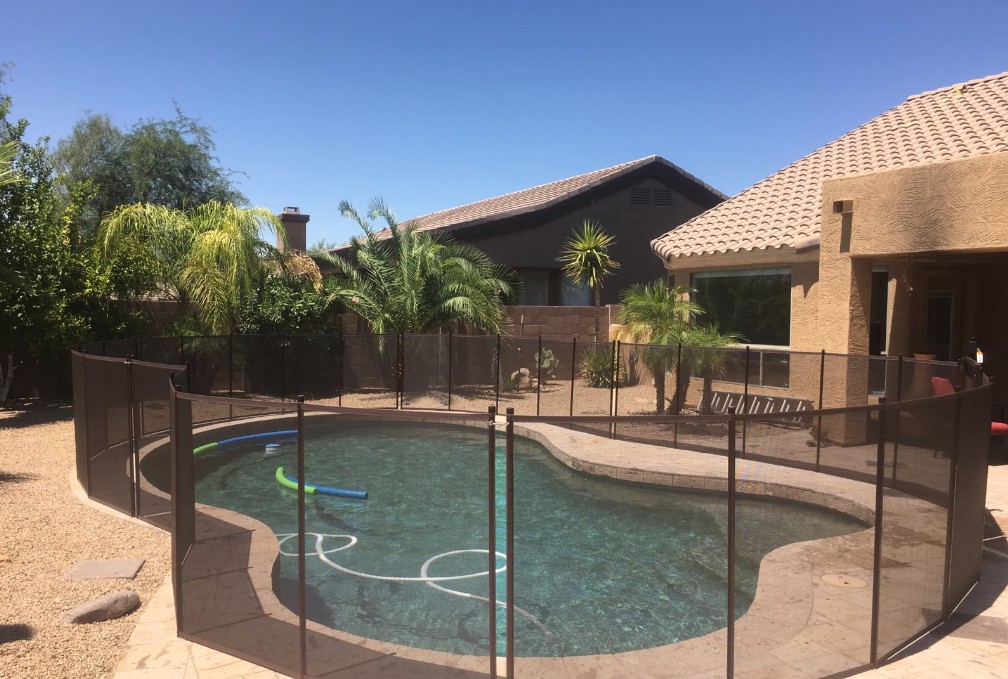
Pros: Lightweight, removable, safe for kids and pets, affordable
Heat-related concerns:
- UV Degradation: Cheaper mesh fabrics may become brittle after long-term sun exposure, leading to tearing or sagging.
- Fading: Black and colored mesh may fade unevenly in areas with constant sunlight.
- Post Warping: Inexpensive or poorly installed poles can bend or loosen due to repeated heat expansion.
2. Glass Pool Fences

Pros: Sleek, modern appearance; clear sightlines; durable
Heat-related concerns:
- Surface Heat: Glass absorbs and retains heat, making panels dangerously hot to touch, especially for kids.
- Frame Expansion: Metal frames around panels can expand in extreme heat, loosening connections or seals.
- Etching & Staining: Water evaporating on hot glass panels can leave mineral deposits and etching over time.
3. Wrought Iron Pool Fences

Pros: Strong, permanent, elegant look
Heat-related concerns:
- Hot Surfaces: Iron heats up quickly and can burn if touched on hot days.
- Paint Damage: Heat and UV exposure can cause bubbling, peeling, or fading of protective coatings.
- Rust Risk: Once the coating is compromised, exposure to water (from sprinklers or monsoons) can accelerate corrosion.
4. Vinyl Pool Fences
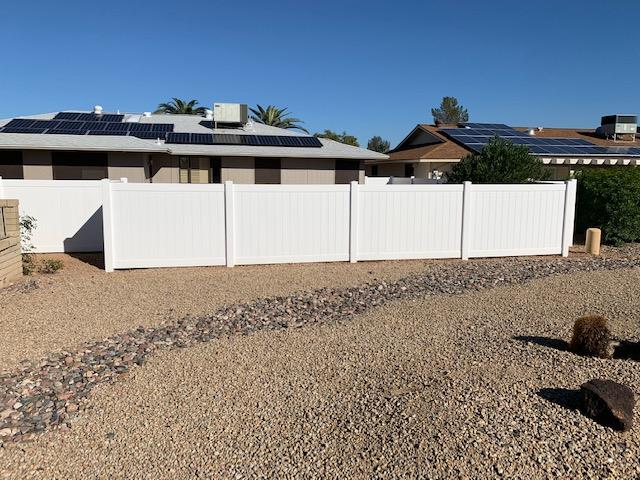
Pros: Low maintenance, cost-effective, won’t rust
Heat-related concerns:
- Warping & Bending: Prolonged exposure to high temperatures can cause vinyl to soften and sag.
- Discoloration: White and light-colored vinyl can turn yellow or chalky with excessive UV exposure.
- Cracking: Vinyl becomes more brittle over time, especially when exposed to temperature fluctuations and intense sun.
5. Aluminum Pool Fences
Pros: Rust-resistant, lightweight, customizable, cost-effective
Heat-related concerns:
- Expansion: Aluminum naturally expands and contracts with heat changes, which can loosen fittings or misalign panels.
- Coating Breakdown: Powder-coated aluminum is durable, but if the coating fails, the material underneath can degrade quickly.
- Surface Heat: Aluminum can become hot to the touch, though it usually cools faster than iron.
Comparing All Materials at a Glance
| Material | Heat Resistance | Maintenance Needs | Lifespan in AZ | Key Concern |
| Mesh | Moderate | Moderate | 5–10 years | UV fading, sagging |
| Glass | High | Low | 10+ years | Surface heat, stains |
| Wrought Iron | Moderate | High | 10–15 years | Rust, hot to touch |
| Vinyl | Low–Moderate | Low | 5–10 years | Warping, discoloration |
| Aluminum | High | Low–Moderate | 10+ years | Expansion, heat |
Signs Your Pool Fence Is Being Damaged by Heat
Arizona’s sun quietly wears down your pool fence, too. If you know what to look for, you can catch heat damage early and avoid costly repairs or safety issues. Here are the most common warning signs your pool fence is suffering from heat exposure:
1. Fading or Discoloration
UV rays are relentless in Arizona. If your mesh is turning gray, your vinyl fence is yellowing, or your iron panels look dull, fading is likely underway. Fading often signals material breakdown that weakens the fence over time.
2. Warping or Bending
Vinyl and mesh fences are especially prone to softening and sagging in extreme heat. If panels are no longer straight or if mesh sections have started to droop or buckle, it may be due to prolonged sun exposure.
3. Cracked or Brittle Materials
Dry, brittle vinyl or flaking mesh can break apart with even light pressure. This puts your fence’s integrity and your pool safety at risk.
4. Rust or Corrosion
With wrought iron or improperly coated aluminum, bubbling paint or orange streaks mean rust is forming. This can weaken joints and create structural problems, especially after the monsoon season.
5. Loose Posts or Hardware
Thermal expansion and contraction can loosen anchor points, posts, and gate hardware. If your gate doesn’t self-close anymore or a fence section wiggles, heat fatigue could be the culprit.
How to Prevent Heat Damage and Extend Fence Lifespan
The intense Arizona heat may be unavoidable, but damage to your pool fence doesn’t have to be. With the right materials, installation techniques, and maintenance routine, you can extend the life of your fence and keep it functioning and looking like new.
1. Choose Heat-Resistant, UV-Stabilized Materials
Not all fencing materials are created equal. When purchasing or replacing a pool fence, ask for:
- UV-resistant mesh or powder-coated metals.
- Tempered safety glass with durable framing.
- Vinyl with UV inhibitors to prevent warping and discoloration.
Investing a little more upfront in higher-quality materials pays off long-term in Arizona’s climate.
2. Professional Installation Matters
Proper installation ensures your fence can handle heat-related expansion and ground shifting. Pros will:
- Anchor posts deeply and securely in concrete.
- Allow for slight material movement without compromising structure.
- Use appropriate fasteners and coatings designed for high heat.
3. Clean and Inspect Regularly
Once a season (or more during summer), inspect for:
- Fading, cracks, rust, or sagging mesh.
- Loose hardware or misaligned gates.
- Stains or mineral deposits on glass or mesh.
Cleaning with mild soap and water also prevents buildup that can accelerate material degradation.
4. Provide Partial Shade (When Possible)
Strategic use of shade sails, trees, or patio structures can reduce direct sun exposure on parts of your fence, especially gates or sections facing south or west.
Should You Repair or Replace a Heat-Damaged Fence?
Not all pool fence damage means you need a full replacement, but knowing when to repair versus replace can save you time, money, and potential safety hazards.
When a Repair Is Enough
Minor wear and tear can often be addressed with a simple fix:
- Replacing faded mesh panels.
- Recoating rust spots or peeling paint on iron or aluminum.
- Tightening loose posts or gate hinges.
- Cleaning up mineral buildup on glass panels.
If the structure is still solid and materials are high quality, a small repair might restore both function and appearance.
When It’s Time to Replace
Some types of damage signal deeper deterioration:
- Warped or cracked vinyl panels.
- Severely sagging or brittle mesh.
- Loose or rusted posts that compromise stability.
- Gates that no longer close or latch properly.
In these cases, a full replacement ensures your pool fence continues to meet safety standards, especially for families with children or pets.
Why Working With a Local Arizona Pool Fence Expert Matters

Erica Culley’s family with Child Crisis Arizona officials and their newly installed pool fence.
When it comes to protecting your family and complying with Arizona pool safety laws, hiring just any fence company isn’t enough. You need someone who understands what the desert climate does to materials and how to build a fence that can withstand it.
Whether you’re installing a new fence or replacing a heat-damaged one, working with a local team means faster service, better recommendations, and a pool barrier that’s truly built for Arizona living.
Protecting Your Pool Fence from Arizona’s Heat
From UV damage and fading to warping and structural wear, extreme temperatures can shorten the life of your fence and compromise your pool’s safety. The good news? With the right materials, routine maintenance, and support from a local expert, you can keep your fence strong, compliant, and looking great, season after season.
If you’ve noticed signs of heat damage or it’s been a few years since your last inspection, now’s the time to act. Don’t wait for small issues to turn into costly repairs or safety hazards.
Contact us today for a free evaluation or quote, and make sure your pool fence is ready to handle another Arizona summer.